
Our Stories
Strengthening Border Enforcement in Angola to Combat Illegal Timber and Wildlife Trade


Illegal trade in timber and wildlife continues to threaten biodiversity, ecosystem integrity, and rural livelihoods across the Kavango Zambezi Trans Frontier Conservation Area (KAZA TFCA), the world’s largest terrestrial conservation landscape spanning Angola, Botswana, Namibia, Zambia, and Zimbabwe. As cross-border trade expands, so do the risks associated with illicit trafficking, underscoring the need for stronger enforcement at key border points.
Across the KAZA region, Partner States face persistent challenges including limited technical capacity among frontline officers, gaps in enforcement tools, and inadequate coordination among border agencies. In Angola, vast and remote border areas further complicate enforcement, highlighting the need for targeted investments in skills development and operational support.
To address these challenges, the KAZA Secretariat, with financial support from the United States Forest Service and Federal Republic of Germany through KfW, is facilitating a regional project aimed at combating illegal trade in timber and wildlife products. The project focuses on strengthening capacity, enhancing coordination, and equipping frontline officers with the tools needed to effectively enforce the Convention on International Trade in Endangered Species of Wild Fauna and Flora (CITES).
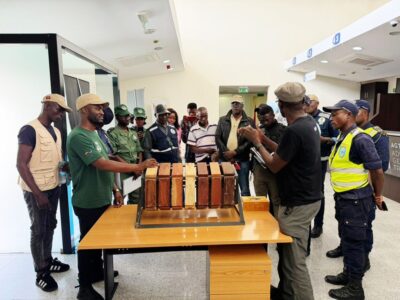
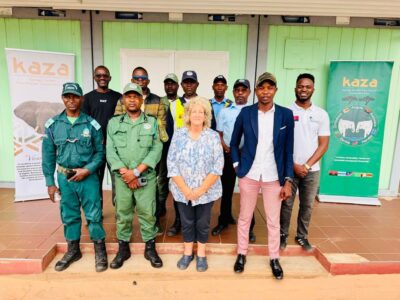
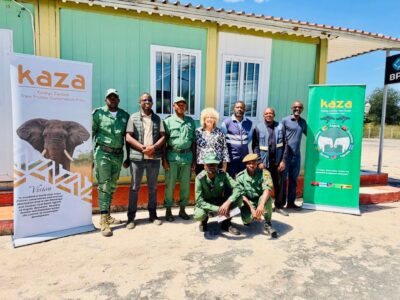
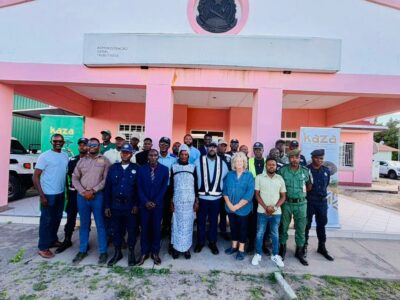
As part of this effort, targeted training sessions were conducted in Angola’s key border areas including Buabuata, Mucusso, Calai, and Katwitwi respectively, within the KAZA landscape. The training brought together customs and immigration officials, forestry officers, police, and wildlife authorities working at the frontline of cross-border trade.
A total of 67 Angolan law enforcement officers were trained, significantly strengthening national capacity to detect and prevent illegal trade. This brings the total number of officers trained across the KAZA region to 796, marking a substantial step forward in building a coordinated regional response to environmental crime.
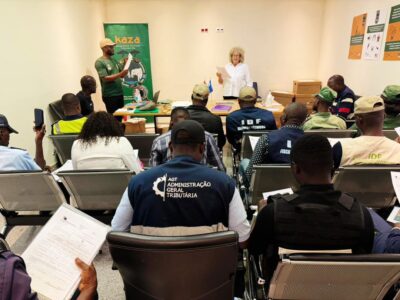
The training sessions were highly practical and tailored to the operational realities faced by officers on the ground. Participants were equipped with skills to identify CITES-listed timber species, detect fraudulent or counterfeit permits, and apply standardized procedures for verifying documentation. Special emphasis was placed on real-world scenarios, enabling officers to better respond to complex enforcement situations at border posts.
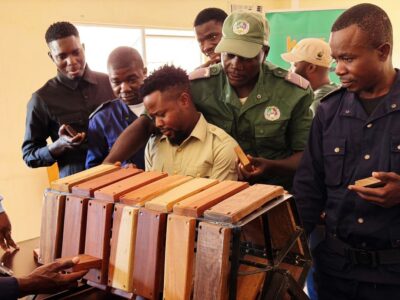
Officers were introduced to the KAZA Timber Permit Reference Guide (TPRG), a digital verification tool designed to improve the accuracy and efficiency of permit checks. Participants were also trained in the use of timber identification wheels, specialized instruments that assist in distinguishing protected timber species in the field.
Beyond technical skills, the training also fostered stronger collaboration among agencies operating at border points. By bringing together customs, forestry, wildlife, and police officers, the initiative helped to build a shared understanding of roles and responsibilities, while promoting coordinated responses to illegal trade. This inter-agency cooperation is essential for effective enforcement, particularly in transboundary landscapes like KAZA.

Importantly, the Angola trainings contribute to the broader goal of equipping officers across all ports of entry and exit within the KAZA TFCA with the knowledge and tools needed to combat illegal wildlife and forest trade. By strengthening frontline capacity, the project is helping to create a more resilient and responsive enforcement network across the region.
The impact of these efforts extends beyond law enforcement. By curbing illegal trade, the initiative supports the conservation of critical ecosystems, protecting biodiversity, and safeguarding the livelihoods of communities that depend on natural resources. It also reinforces the commitment of KAZA Partner States to sustainable natural resource management and regional cooperation.
As KAZA continues to advance its vision of a well-integrated and sustainably managed trans frontier conservation area, investments in capacity building and cross-border collaboration remain central. The successful implementation of training activities in Angola demonstrates the tangible progress being made toward this goal.
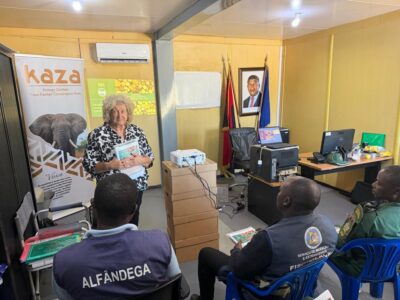
By empowering frontline officers, strengthening institutional coordination, and deploying practical enforcement tools in the form of timber wheels, KAZA and its partners are making meaningful strides in addressing illegal wildlife and timber trade.
These efforts not only enhance compliance with international conventions such as CITES but also contribute to the long-term protection of the region’s rich natural heritage.
In a landscape as vast and interconnected as KAZA, no single country can tackle these challenges alone. Through continued collaboration, shared learning, and sustained investment, the region is building a unified front against environmental crime ensuring that its forests, wildlife, and communities are protected for generations to come.