
Our Stories
Zambia Shares Green Finance Lessons with Botswana Delegation


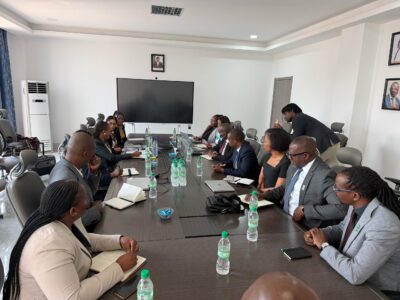
Zambia’s Securities and Exchange Commission (SEC), together with government, UNDP and private sector stakeholders, hosted a high-level Botswana delegation for a three-day knowledge exchange focused on sustainable finance, biodiversity financing, and capital market development from 2 – 4 September 2026.
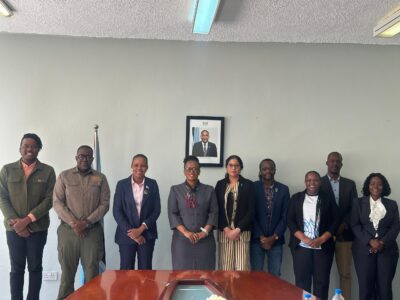
The exchange brought together representatives from Botswana’s Ministry of Environment and Tourism, the Kavango Zambezi Trans Frontier Conservation Area (KAZA TFCA) Secretariat, green finance practitioners, UNDP, and Zambia’s financial sector stakeholders to share experiences and identify opportunities for deeper regional collaboration on climate, conservation, and sustainable development financing. The Botswana delegation, led by the Permanent Secretary in the Ministry of Environment and Tourism, Ms. Abigail Khumoyame comprised officials from the Bank of Botswana, Ministry of Finance, UNDP Botswana and the KAZA Secretariat – representing the five Partner States and the Finance Working Group.
A central theme throughout the engagement was the importance of translating sustainable finance frameworks into tangible market outcomes and investment opportunities.
Participants emphasized that success should be measured not by the number of policies, workshops or studies completed, but by the volume of capital mobilized and transactions executed to support sustainable development objectives.
During the discussions, the SEC highlighted Zambia’s experience in building a sustainable finance ecosystem through regulatory innovation and institutional coordination. A key lesson shared was Zambia’s decision to advance sustainable finance primarily through regulator-issued guidelines rather than lengthy legislative reforms.
SEC officials explained that existing securities legislation already provides sufficient legal foundations for bond issuance, enabling regulators to introduce frameworks for green, sustainability, blue and other thematic bonds through targeted guidance without requiring parliamentary amendments.

This approach has enabled Zambia to respond more quickly to emerging market needs while maintaining regulatory certainty for issuers and investors.
Zambia’s sustainable finance agenda gained significant momentum following the introduction of the Green Bond Guidelines in 2019. The SEC reported that the country’s first major green bond was registered in 2023 to support electricity transmission and renewable energy investments. A sustainability bond supported by UNDP has also been registered, with fundraising activities expected to progress in the future.
Participants noted that climate-related vulnerabilities, particularly recurring droughts affecting hydropower generation and agricultural productivity, have increased the urgency of mobilizing sustainable finance solutions. These risks are increasingly influencing investment decisions, corporate performance, and long-term financial stability.
The SEC also emphasized the importance of institutional ownership in driving market development, highlighting the establishment of a dedicated Green Finance Manager position to coordinate initiatives and support the development of investable sustainable finance transactions.
The delegation received detailed presentations on Zambia’s 10-Year Capital Markets Master Plan (CMMP), which serves as the country’s long-term roadmap for capital market development.
The strategy seeks to deepen capital markets, expand access to long-term finance, diversify investment products, and align financial market development with Zambia’s national development priorities and the Sustainable Development Goals (SDGs).
Participants examined the governance structure supporting implementation, including a Steering Committee chaired by the Secretary to the Treasury, an Implementation Committee, and five thematic working groups focused on government bonds, traditional securities, innovative financial instruments, regulatory reform, and capacity building.
Among the investment products being prioritised under the strategy are green bonds, Exchange-Traded Funds (ETFs), Real Estate Investment Trusts (REITs), sustainability-linked instruments, and other innovative capital market products.
Botswana delegates expressed particular interest in Zambia’s governance arrangements, implementation mechanisms, and efforts to move sustainable finance initiatives from policy design to active market transactions.
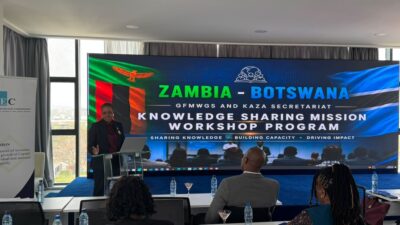
A significant portion of the exchange focused on the next phase of sustainable finance development, including implementation of Zambia’s Green Taxonomy and sector-wide sustainability reporting framework.
Participants discussed how Zambia’s green bond guidelines, which are based on International Capital Market Association (ICMA) principles, interact with the national taxonomy to strengthen market integrity and reduce greenwashing risks.
Discussions also explored how financial sector regulators are coordinating Environmental, Social and Governance (ESG)-related guidance through collaborative working groups rather than a single overarching ESG framework.
The planned sustainability reporting framework aims to improve consistency in disclosures across banking, insurance, pension and capital market sectors while aligning with emerging international sustainability reporting standards.
Despite the progress achieved, participants identified several challenges requiring continued attention, including limited market awareness, insufficient green investment data, weak incentive structures, slow adoption of taxonomy-based reporting, and the need for greater harmonisation of sustainability-related reporting standards across sectors.
The KAZA Secretariat presented on the work of the Finance Working Group’s ongoing efforts to strengthen conservation finance across Angola, Botswana, Namibia, Zambia and Zimbabwe as well as progress since the KAZA Heads of State and Government Summit of 2024.

The presentation outlined governance arrangements, funding priorities and a pipeline of sustainable finance initiatives, including a proposed regional conservation trust fund and mechanisms to mobilise biodiversity and climate finance. Participants also discussed the development of a coalition trust fund proposal expected to be advanced by December 2026.
Botswana shared updates on its green and biodiversity finance initiatives under the MBBF project and sought practical lessons from Zambia’s more established green finance ecosystem. Discussions examined opportunities to strengthen private sector participation, mainstream biodiversity finance into national development planning, and develop practical guidance to support taxonomy implementation.
The exchange further explored sustainable financing solutions for nature-based tourism, wildlife conservation and broader economic diversification efforts. Delegates discussed innovative finance instruments and approaches to addressing human-wildlife conflict through sustainable financing mechanisms rather than relying solely on direct government compensation.
On the final day of the exchange, representatives from the Government of Botswana, KAZA Secretariat, SEC Zambia, UNDP and other stakeholders met to discuss institutional arrangements for sustainable finance coordination and the establishment of effective cross-sector working groups.
Participants also exchanged lessons on policy implementation, including Zambia’s Presidential Delivery Unit model and broader approaches to accelerating reform execution and accountability.
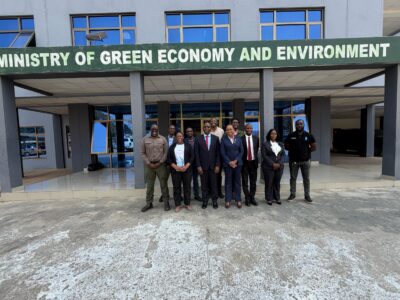
The visit concluded with agreement on a series of follow-up actions aimed at strengthening regional cooperation. These include continued technical engagement on green bonds, taxonomy implementation, conservation finance and capital market development; improved green finance data collection and reporting systems; clarification of available green bond incentives; and strengthened coordination ahead of upcoming regional and global engagements, including COP-related processes.
The Botswana and Zambia teams also agreed to maintain structured virtual engagements and to continue sharing experiences on conservation trust fund capitalization, sustainable finance instruments, and national coordination mechanisms.
The exchange forms part of broader regional efforts to strengthen sustainable finance ecosystems, mobilize investment for climate resilience and biodiversity conservation, and support sustainable economic development across the Kavango-Zambezi landscape and the Southern African region.