
Our Stories
KAZA Animal Health Sub Working Group shifts focus from technical planning to implementation


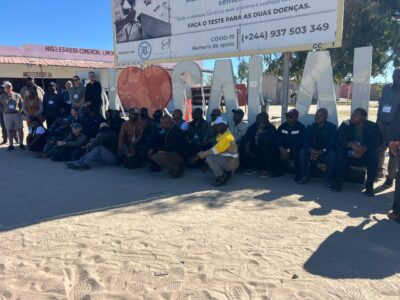
Calai, Angola | 20 August 2026- The Kavango Zambezi Trans Frontier Conservation Area (KAZA TFCA) Animal Health Sub Working Group (AHSWG) concluded its annual meeting in Calai, Angola held from 18 to 20 August, bringing together Directors of Veterinary Services and Animal Production, Heads of Wildlife Veterinary Services and technical partners from all five KAZA Partner States.
Hosted by the Government of Angola through the Municipal Administration of Calai and the Institute of Veterinary Services, the meeting was chaired by Kennedy Shoombe, Director of Veterinary Services, Namibia, and facilitated by the KAZA Secretariat in collaboration with the AHEAD programme.
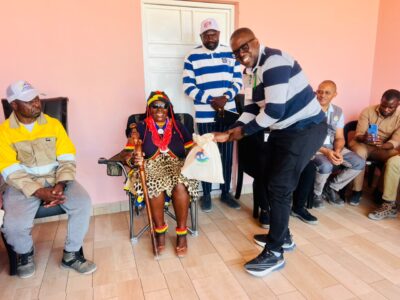
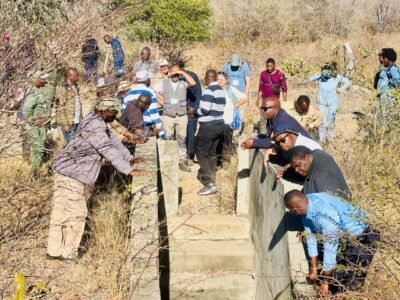
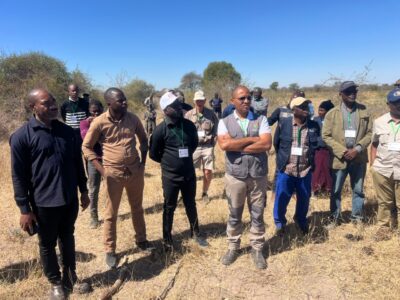
Delegates travelled to Sofe and were received by Her Majesty Sofia Zangunza, Municipal Queen of Calai, in an engagement that provided an opportunity for cultural exchange and interaction with local leadership. Delegates further visited a cattle vaccination pen and dip tank under the coordination of the Angolan Institute of Veterinary Services. The visit provided practical insight into livestock husbandry and disease prevention measures in the area, reinforcing the links between animal health, livelihoods and conservation.
The technical sessions provided an opportunity for Partner States to take stock of progress and identify remaining gaps. The KAZA Secretariat and Steering Committee provided updates on regional developments, while Angola, Botswana, Namibia, Zambia and Zimbabwe presented on current activities, challenges and priorities from animal health, animal production and community livelihoods perspectives. Regional and international partners, including the World Organisation for Animal Health (WOAH), the SADC Food, Agriculture and Natural Resources Directorate, the Food and Agriculture Organization of the United Nations, the Botswana Vaccine Institute and the University of Namibia School of Veterinary Medicine, also shared technical updates.
The discussions demonstrated that significant technical work is already underway across KAZA. AHEAD presented Phase 3 of the veterinary fencing assessment, which incorporates community and stakeholder perspectives into the analysis of fence management and strategic herding. CLAWS and REHerd Africa shared lessons from the scaling up of strategic herding models and wildlife-friendly beef initiatives in Botswana’s Okavango eastern panhandle and beyond, while REHerd Africa and the AHSWG Epidemiologist reported on Phase 1 of the KAZA State of Livestock assessment.
Delegates also considered progress and priorities related to training needs, disease surveillance, diagnostic capacity and the KAZA protocol for sample movement. Further discussions covered cross-sectoral One Health cooperation, potential wildlife pathology support and the implications of recent foot-and-mouth disease outbreaks and livestock theft for Partner States.
The KAZA Secretariat further highlighted the role of the AHSWG in supporting implementation of the KAZA Elephant Action Plan, demonstrating how animal health work contributes to the broader objective of maintaining ecological connectivity and supporting coexistence between wildlife, livestock and communities across the landscape.
Participants identified coordinated foot-and-mouth disease management, surveillance and data sharing, strengthened diagnostic capacity, strategic herding, fence management and cross-border vaccination as areas where technical direction is increasingly established but implementation remains uneven. To address this, delegates called for clearer implementation pathways, defined responsibilities, interim progress reviews, quarterly reporting through country coordinators and stronger engagement between annual meetings.
The meeting also emphasised the importance of aligning AHSWG activities more closely with the priorities of KAZA National Committees. Stronger links between regional technical structures and national coordination mechanisms will be important for strengthening country ownership, improving information flow and ensuring that agreed priorities translate into action at national and local levels.
The meeting identified priority actions in five areas going forward:
– Coordination and governance: regular implementation tracking between annual meetings, stronger quarterly reporting through country coordinators, improved information flow between Partner States and the KAZA Secretariat, and more effective use of National Committees.
– Surveillance and information sharing: finalising a common data sharing format including GPS coordinates and disease specific fields, and improving timely submission of epidemiological information.
– Capacity development: a regional assessment of diagnostic and pathology needs, resource mobilisation for laboratory and field staff training, and expanded collaboration with universities and regional laboratories.
– Disease control: stronger regional FMD coordination, clarity on the BVI antigen bank approach and member state requirements, and synchronised surveillance and vaccination strategies.
– Livestock and wildlife interface: continued evaluation of strategic fence removal options, expansion of strategic herding, and attention to community concerns around livestock theft and livelihoods alongside conservation objectives.
As land-use change, population growth and competing development demands place increasing pressure on the landscape, integrated approaches to animal health, conservation, livelihoods and land-use planning will be essential to maintaining ecological connectivity while supporting community development and wildlife-based economic opportunities. The Calai meeting marked an important step in KAZA’s efforts to move from technical agreement towards delivery.
Concluding the meeting, the KAZA Secretariat expressed appreciation to the Government of Angola, the Municipality of Calai, the Institute of Veterinary Services, technical partners and all delegates for their hospitality and contributions, and to the AHSWG for advancing priorities that will now require sustained coordination, country ownership and follow-through to translate regional commitments into results on the ground.