
Our Stories
EU AMBASSADORS VISIT KASANE AND CHOBE DISTRICT TO STRENGTHEN COLLABORATION WITH LOCAL AUTHORITIES AND COMMUNITIES


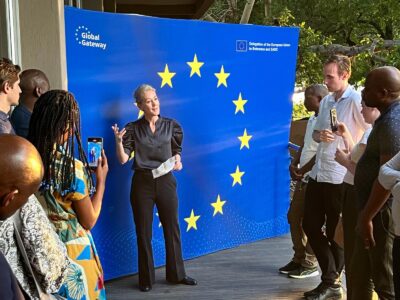
A high‑level delegation of European Union (EU) Heads of Mission undertook a working visit to Chobe District during 17–20 March 2026 as part of the EU’s annual outreach aimed at strengthening partnerships beyond the capital and deepening cooperation on conservation, eco-tourism, economic diversification, and regional integration. The visit took place in a milestone year marking Botswana’s 60th Independence anniversary, 45 years of EU–Botswana partnership and celebrating 10 years of the EU–SADC Economic Partnership Agreement (EPA). Led by Her Excellency Petra Pereyra, Ambassador of the European Union to Botswana and SADC, the delegation included His Excellency Pekka Metso, Ambassador of Finland to South Africa, Botswana, Lesotho, and Mauritius, and Her Excellency Gabriela Bennemann, German Ambassador to Botswana and Special Representative to SADC.
In Kasane, the delegation met the Minister of Environment and Tourism, Honourable Wynter Mmolotsi, who outlined government’s initiatives to reposition Chobe as a diversified regional tourism hub. These include unlocking riverfront investment opportunities, developing city infrastructure and cultural tourism, strengthening community‑based natural resource management, and easing mobility constraints to support tourism, trade, and investment. The Ambassadors congratulated Botswana on being named “Destination of the Year” at the ITB Berlin Travel Awards and the Minister himself on his leadership in nature-based tourism. The Ambassadors also elaborated on various EU supported initiatives related to the tourism sector in Botswana as a driver for growth and job creation, and the importance of a sustainable and balanced approach, including active participation by local communities.
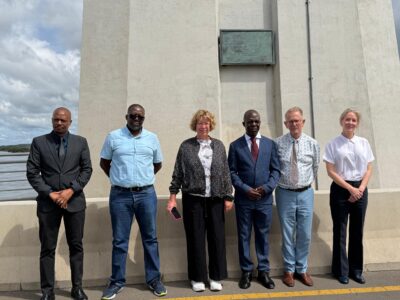
At the Kazungula Bridge Authority, the Executive Director Mr. Mukela Muyunda briefed the delegation on the bridge’s role as a regional driver of logistics, tourism, agriculture, and trade. Discussions focused on enhancing border efficiency, progressing towards 24‑hour and no‑stop operations, and leveraging the bridge for broader and integrated economic development. Ambassadors highlighted the alignment with the EU’s Global Gateway Initiative, which supports development of strategic corridors in the Southern Africa region boosting regional connectivity, transport, trade and economic integration. Importance of improving logistics, including through railway connections, in addition to the potential to transform the local economies through associated services was also highlighted. The delegation later undertook a guided tour of the bridge and one-stop border facilities.
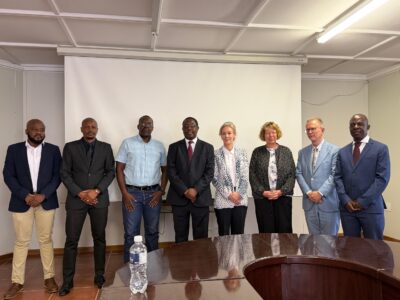
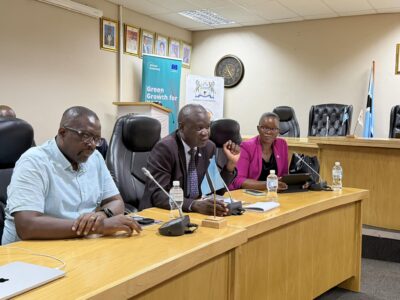
During a courtesy call with the Chobe District Council, Chairperson Hon. Johane Chenjekwa highlighted the district’s unique conservation landscape, 74% of Chobe is under protection, and outlined key priorities such as human–wildlife coexistence, waste management, renewable energy, and alternative livelihoods. The Ambassadors emphasized the importance of conservation approaches that also improve community wellbeing and livelihoods, promoting circular economies.
The KAZA TFCA Secretariat Executive Director, Dr Nyambe Nyambe, acknowledged the EU and Germany as key partners in advancing regional conservation, climate resilience, and cross‑border law‑enforcement cooperation. He noted that challenges observed in Chobe mirror those across the wider KAZA landscape, reinforcing the need for coordinated, transboundary solutions.
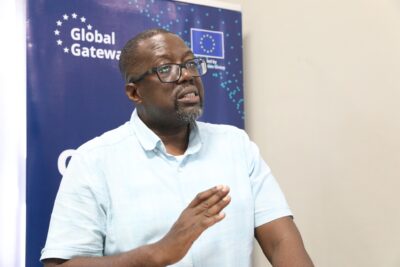
During a media engagement session, and speaking on behalf of the delegation, Ambassador Pereyra commended Botswana’s leadership in conservation, positioning it as a premier wildlife destination. The delegation reaffirmed the EU’s commitment to working with local, national, and regional institutions and partners to deliver practical, community‑centred solutions that balance conservation objectives with inclusive economic development and livelihoods. The delegation further highlighted ongoing EU support, including to Botswana’s energy transition with recently launched programme promoting renewable energy and energy efficiency in line with national priorities.
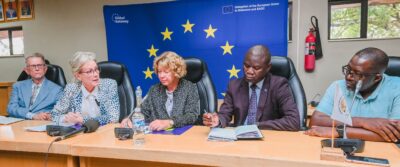
Further engagements included meetings with the Ministry of Environment and Tourism (including the Department of Wildlife and Natural Parks) and Botswana Tourism Organisation, which highlighted EU and German‑supported interventions in human–wildlife conflict mitigation, infrastructure improvements, and officer training in CITES reporting. The Botswana Tourism Organisation showcased EU and German-supported initiatives, including the Kavango Zambezi Destination Brand and the Great KAZA Birding Route.
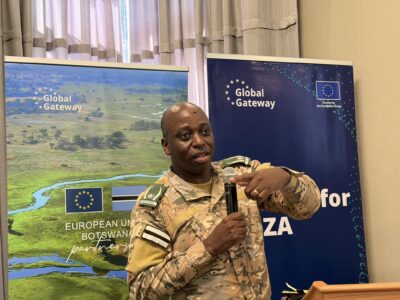
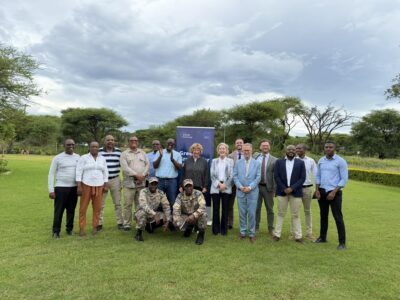
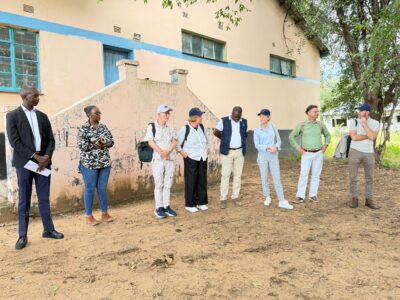
Community and conservation partners presented innovative coexistence and livelihood initiatives involving predator‑proof kraals, wildlife‑friendly beef certification, conservation‑linked enterprises, and science‑based livestock protection. A field visit to Chobe West highlighted the work of the Chobe Enclave Community Trust in natural resource management and community development.
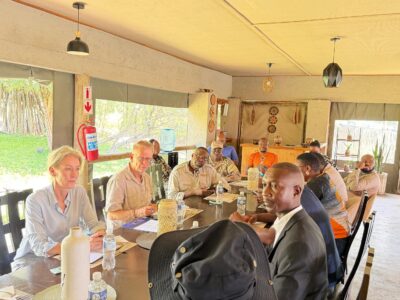
Additional engagements included discussions with private sector, tourism operators, and civil society organisations working on health, HIV/AIDS, and human rights. The mission exchanged on the transboundary water resources governance and management, climate change and the strategic importance of Angola to regional water security.